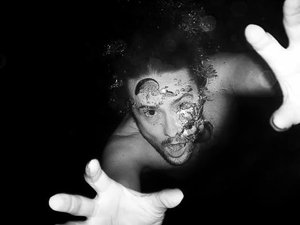
Moving from Clicking to Capturing and Creating images.
When I first got into photography (and honestly, when I pick up my camera after time away), it’s easy to fall into one habit:
I click. I point the camera at something interesting and press the shutter… and hope. Sometimes you get a great photo that way. But it’s usually by chance. If you want to increase the odds of making a good photograph, the goal is to move away from mindless clicking and into active photography, which, for me, comes in two flavours:
Capturing images
Creating images
They’re different approaches, but they share one thing: intention.
Clicking (mindless) — the “hope” approach
Clicking is when you:
react quickly
don’t really decide what the photo is about
don’t control the result
rely on luck
There’s no shame in clicking — it’s where everyone starts, and it’s often how we warm up. But if clicking is your main approach, your results will be inconsistent, because you’re not steering the outcome.
If you feel like you “take loads of photos but rarely get a keeper”, it’s often because you’re mostly clicking.
I waited for this Painted Stork to walk out of the shadows and into the patch of sun.
Capturing images (active) — working with what’s already there
Capturing is when the scene already exists, and your job is to recognise the moment and record it well.
You’re not setting things up. You’re responding to reality, but deliberately.
Capturing often looks like:
waiting half a second for the gesture / expression
moving your feet to simplify the background
choosing the angle that tells the story best
anticipating motion (wildlife, kids, street, sport)
being patient and ready rather than spraying and praying
Capturing is about timing, awareness, and selection.
You’re still photographing what the world gives you, but you’re choosing the moment, not a moment.

A bowl, some water, doped fork and speedlite.
Creating images (active) — influencing the outcome
Creating is when you don’t just accept what’s there — you shape the photograph.
That might mean:
changing your position to design the composition
using light on purpose (window light, flash, reflector, silhouette)
directing a person (“turn your shoulders”, “step into the light”)
choosing a background intentionally
setting constraints (only one focal length, one subject, one theme)
Creating is about control and construction.
Even in candid photography, you can create by setting yourself up:
picking the location because the background is clean
choosing the light direction
pre-focusing / pre-framing and waiting for the subject to enter your “stage”
Practical Next Steps
The simplest way to move away from clicking is to start thinking about the photograph you want to take.
Before you press the shutter, pause and ask yourself what you are photographing and why. What is the subject? What caught your attention? What is the story you are trying to tell, even in the simplest sense? Am I in the right place to capture the moment, or would it better from over there? That moment of thought immediately shifts you from mindless clicking to intentional photography.
Take three photographs of the same subject, each one deliberately different. Change your position, your angle, or the side you shoot from. Don’t overthink it, just make sure each image is a conscious variation. Later, look at the three images and ask which one worked best, and why. This turns every situation into a small experiment. The next time you face something similar, you’ve already learned what tends to work, and you’ll make better decisions instinctively rather than by chance.
Don’t worry too much about technique, use auto mode if you need to. Technique is the easy part and can be learned over time. A photograph can be powerful even if it isn’t technically perfect, but a technically perfect image that misses the moment or the meaning is still a bad photograph. Focus first on seeing, choosing, and understanding what matters in front of you. The rest can come later.